Sunday, April 26, 2015

Sunday, April 19, 2015
Wednesday, April 15, 2015
Spiral Dynamics
"What I am proposing is that the psychology of the mature human being is an unfolding, emergent, oscillating, spiraling process, marked by progressive subordination of older, lower-order behavior systems to newer, higher-order systems."--Clare Graves

For those unfortunate enough to engage in a "deep" discussion of some variety with me over the past five years, chances are I've pressed on you a reference to the book Spiral Dynamics: Mastering Values, Leadership, and Change by Don Beck and Christopher Cowan. I happened upon this book a few years ago, and it's had an impact on how I view the human condition and my own journey within it. Due to a serendipitous encounter with my friend and mentor Pastor Steve Poos-Benson, I've recently re-read it, at what seems an ideal juncture. I think about it often, and how it applies in my life. Is the conceptual model it describes coherent with reality? I think so. I think it's generally considered a valid framework with a proven track record in implementation. It's a psychology book, a self-help book, a leadership manual. It's about evolutionary psychology, applied to both individuals and to civilization. It's a tough book to summarize, but I'm a-gonna try.
Spiral Dynamics seems to resonate with holistically-minded people, describing in a useful format some elusive and profound insights about the ever-progressing nature of human (and cultural) psychology and spiritual development. It presents a schema that facilitates useful conversation about people and societies going through periods of growth, change, and turmoil. It jives with my experiences and observations. In particular, the last section of the book, "The Spiral Wizard's Field Manual," gives a good application of how this whole model works.
Beck and Cowan based their model on the work of their mentor, Dr. Clare Graves, PhD. Here is a citation from wikipedia about Graves' foundational theory, "The Emergent Cyclical Levels of Existence Theory":
Graves created an epistemological theory that he hoped would reconcile the various approaches to human nature and questions about psychological maturity. He collected pertinent data from his psychology students and others (in total a diverse group of around 1,065 men and women aged 18 to 61) in the seven years from 1952 to 1959.[1] He gathered conceptions of the mature personality and conducted batteries of psychological tests using recognized instruments. His analysis of this data became the basis for a theory that he called, among other titles, "The Emergent Cyclical Levels of Existence Theory" (ECLET).Graves theorized that in response to the interaction of external conditions with internal neuronal systems, humans develop new bio-psycho-social coping systems to solve existential problems and cope with their worlds. These coping systems are dependent on evolving human culture and individual development, and they are manifested at the individual, societal, and species levels. He believed that tangible, emergent, self-assembling dynamic neuronal systems evolved in the human brain in response to evolving existential and social problems. He theorized "man's nature is not a set thing, that it is ever emergent, that it is an open system, not a closed system." This open-endedness set his approach apart from many of his contemporaries who sought a final state, a nirvana, or perfectibility in human nature. His inclusion of the bio-, psycho-, social, and systems theory as vital co-elements also described an inclusive point of view that continues developing today.Graves' work observes that the emergence within humans of new bio-psycho-social systems in response to the interplay of external conditions with neurology follows a hierarchy in several dimensions, though without guarantees as to time lines or even direction: both progression and regression are possibilities in his model. Furthermore, each level in the hierarchy alternates as the human is either trying to make the environment adapt to the self, or the human is adapting the self to the existential conditions. He called these 'express self' and 'deny self' systems, and the swing between them is the cyclic aspect of his theory. Graves saw this process of stable plateaus interspersed with change intervals as never ending, up to the limits of the brain of Homo sapiens, something he viewed as far greater than we have yet imagined.
Spiral Dynamics builds on Maslow's Hierarchy of Needs. It proposes that human psychology and society continuously adapt to existing Life Conditions (which they call LC). LC1 means the most basic life conditions are present--food, shelter, etc--but there is no time or capacity for deep existential questions. LC5 represents what many First Worlders experience today: material success, technological acheivement, scientific knowledge, along with a sense of alienation, ennui, and deep existential questions about our relationship to the earth and our purpose in the universe. The Orange v-Meme (keep reading, explanation forthcoming) got us to this point, but it can't get us past it.
 As life conditions continually change, then new paradigms of thought are required to meet new challenges. Beck and Cowan have a name for these paradigms/thought patterns/worldviews: v-MEMES. The v-MEMES are "unfolding, emergent, oscillating, spiraling," and in this schematic representation, they are conveniently color-coded, starting with BEIGE, the level of basic survival instinct, and ascending through PURPLE (tribalism) to RED (egocentric power) to BLUE (deference to orthodoxy) to ORANGE (independent entrepreneurism) to GREEN (global equality), and then eventually arriving at YELLOW and TURQUOISE, which are "second-tier" v-MEMES, where systemic thinking, integration, and holism come to life. As these v-MEMES sequentially manifest in the mind and in society, they oscillate between "self-expression" and "self-denial" tones: sometimes the ego needs to assert itself, sometimes the ego needs to take one for the team. Below is an excellent pictogram of the key components of this model, and how each level is differentiated:
Importantly, none of these levels is bad, or inferior. In fact, each is essential, and represents a stage in the development of the individual or society, often revisited in new iterations borne of necessity or from regression. (Think "red" in they terrible twos, again in the early teens, perhaps again in a mid-life crisis.) These levels reflect the continual growth of the human brain and society. You can't really healthily skip through levels. You have to experience them, then "transcend and integrate" each level as you move upward. It happens naturally and predictably as one ages and as life conditions fluctuate, though many people get stuck primarily in one particular level. Also, some levels may manifest circumstantially: at church, you may need to appeal to Blue to stay in the boat; at work, you may need to pull from Orange to get the job done; at that awkward family reunion, you may need to reach for Green to keep the peace. The authors speak frequently about the "health of the whole Spiral." It's a spectrum of thinking patterns that need to be balanced, transcended and integrated, and perhaps pulled out of the hat when life conditions demand it.
When a person (or society) is on the brink of engaging the next level of the Spiral ("a paradigm shift"), there is a predictable period of turmoil. Beck and Cowan call this the Gamma Trap. Here's how that works: a person is at an Alpha State in their v-Meme, where they reside comfortably, and the world appears in harmony with their thinking patterns. "It all makes sense." But inevitably, new Life Conditions and problems emerge, and their present v-MEME cannot adequately address them. They feel discomfort--here called a Beta State. "Nothing makes sense anymore." They feel pulled towards a new Delta--the new way of thinking that will allow the brain/spirit to engage on a higher level and solve their new problems. However, they must first pass through Gamma--this is the existential desert, the dark night of the soul. The guideposts aren't there anymore. The map is leading you in circles. Many people (and cultures) reject the discomfort of Gamma and retreat to the seductively familiar (and falsely reassuring) Alpha state, and thus remain trapped in their old comfort zones--and old problems. "The definition of insanity is doing the same thing over and over again and expecting different results." (Great quote, apparently misattributed to both Einstein and Ben Franklin.) But for those that "lean into" the Gamma Trap--if they survive--they make it to the Delta and engage a new v-MEME which empowers them to think in new ways and thus solve their emerging problems: "transcend and integrate." This Delta becomes the new Alpha State, and they resonate peacefully for a while until the LCs catch up and they encounter new problems that even their new v-MEME can't handle. They are thus compelled to progress further up the spiral, if they can cross their new Gamma Trap. Sounds like "eternal progression" to me. :)
One flaw of any model of human development like this (such as Seven Habits, which also had a big impact on me at another time in my life) is that they can be overly schematic and rigid. ("They've mastered these seven discrete habits, and thus they are highly effective. Congratulations! You, however, having mastered only four of the seven, are only moderately effective. So sorry . . .") Of course no individual or culture resides solely in one level of the Spiral. It's a spectrum. Not every individual has the capacity (instrinsic traits + life conditions + experiences) to progress all the way up the Spiral. As life conditions change, people can slide up or down the Spiral in peak phases, or regressions. Even people in the highest levels of thinking can become fixed and rigid. Yet some individuals are much more adept at moving up and down the spiral, meeting other people wherever they are at, helping them to adapt to their LCs, and helping them take the next step--or half step, or to survive a back step--up or down the Spiral. These people are referred to as Spiral Wizards. They are essential to helping maintain balance and the "health of the whole Spiral."
 Despite being more fluid, perhaps the biggest critique of this model is that it is still hierarchical, and unapologetically so. While making no judgments of absolute superiority or value (people are where there are, society is where it is, everybody is just doing the best they can), Spiral Dynamics does suggest that as the human mind and civilization progress forward through time, there is a natural and beneficial ascendance up the Spiral. The thrust is upward, onward, inward and outward. Here's a final quote from Clare Graves that I think summarizes this idea.
 "I am not saying in this conception of adult behavior that one style of being, one form of human existence, is inevitably and in all circumstances superior to or better than another form of human existence, another style of being. What I am saying is that when one form of being is more congruent with the realities of existence, then it is the better form of being for those realities. And what I am saying is that when one form of existence ceases to be functional for the realities of existence then some other form, either higher or lower in the hierarchy, is the better style of living. I do suggest, however, and this I deeply believe is so, that for the overall welfare of total man's existence in this world, over the long run of time, higher levels are better than lower levels and that the prime good of a society's governing figures should be to promote human movement up the levels of human existence."--Clare GravesSo if you're moving through the Spiral, and find yourself caught in a Gamma Trap . . . don't despair, my friend! Lean into the change. You will survive, and things will get better. It's constant movement, adaptation, evolution. Resurrection and reincarnation. (Please don't take that literally.) It's the butterfly emerging from the chrysalis again and again, this continuous ascending Spiral of the human mind and society.

(Here are some more resources, excellent summaries of the Spiral Dynamics model.)
Friday, April 10, 2015

Saturday, March 28, 2015
Letting Go . . .
"The hardest to learn was the least complicated."-- Indigo Girls

A few years ago. I had an email conversation with a friend, who like me had discovered some affinity for Buddhism, but couldn't quite go all in for it. She had the sense that her present suffering was secondary to her attachment to a difficult relationship, to her yearning for a child, to the idea of love. She (ironically) felt some guilt over this, and her inability to "let go" of her attachments.
As the conversation progressed, I responded: "If we were all Buddhas or Christs, then we wouldn't attach ourselves--and our sufferings and our sense of fulfillment--to other frail human beings. But being mere mortals, we crave the closeness and fulfillment that comes from sharing our lives with somebody else. And while I am enamored with many aspects of Buddhism, this is why I think in the end it's not a practical philosophy for me. Because I LIKE my attachments. I don't want to let go of them--my wife and kids, ambitions, desires, ice cream and pizza. I'll let go when I die--that will be soon enough--but while I'm alive I'm going to attach myself to the things that are meaningful to me. And I realize that this refusal to let go is an invitation for suffering. But suffering is part of the human experience, and in the great karmic scales, you need the pain in order to experience the joy. It's all part of one big mystery, and it's beautiful and terrifying, both empty and full. I guess that's just . . . life."
 This was not so much wisdom from me as protest. I'm not sure what the Buddha would say to it. But I know what a woman named Oriah Mountain Dreamer thinks. She wrote a famous poem called "The Invitation," which is a call to do the exact opposite of letting go. The poem is a challenge to live life to the fullest, to experience the exquisite thrills and aches of life and relationships. She seems to have a particularly robust capacity for Carpe Diem. It's a beautiful poem.
I've been reading a companion book she wrote exploring these ideas. I enjoy it, but hers seems like an invitation to what? To suffering. To joy as well, of course. But the ultimate purpose of it all gets lost in the ecstasy of the moment. It's dancing for the sake of dancing. Hurting for the sake of hurting. We live, we laugh, we cry, we die. Hope it meant something to you. Is that it? Isn't there more? Why do I feel programmed to believe there is?
 Which brings me back to letting go. I've had a few coffee-house conversations recently with other friends (looking at you, Steve and Scott!) where we've discussed this same thread: holding on versus letting go. It seems like there is a tightrope to walk, and the tension between the two provides the ballast. Hold on too tight? Life becomes exquisitely joyful or unbearably painful, but ultimately for naught, 'cuz we all gonna die. But let go of it all? Then what's the point of being alive in the first place. Either way, ultimate meaning evaporates. But being stuck in the middle of ambition and surrender seems to be a place to claim a speck of human dignity and purpose within this infinite cosmos.
It's a daily struggle, and a daily reprieve. Yin and yang.
For me, here are the biggest things I'm trying to let go of:
Still holding on . . .
A few years ago. I had an email conversation with a friend, who like me had discovered some affinity for Buddhism, but couldn't quite go all in for it. She had the sense that her present suffering was secondary to her attachment to a difficult relationship, to her yearning for a child, to the idea of love. She (ironically) felt some guilt over this, and her inability to "let go" of her attachments.
As the conversation progressed, I responded: "If we were all Buddhas or Christs, then we wouldn't attach ourselves--and our sufferings and our sense of fulfillment--to other frail human beings. But being mere mortals, we crave the closeness and fulfillment that comes from sharing our lives with somebody else. And while I am enamored with many aspects of Buddhism, this is why I think in the end it's not a practical philosophy for me. Because I LIKE my attachments. I don't want to let go of them--my wife and kids, ambitions, desires, ice cream and pizza. I'll let go when I die--that will be soon enough--but while I'm alive I'm going to attach myself to the things that are meaningful to me. And I realize that this refusal to let go is an invitation for suffering. But suffering is part of the human experience, and in the great karmic scales, you need the pain in order to experience the joy. It's all part of one big mystery, and it's beautiful and terrifying, both empty and full. I guess that's just . . . life."
This was not so much wisdom from me as protest. I'm not sure what the Buddha would say to it. But I know what a woman named Oriah Mountain Dreamer thinks. She wrote a famous poem called "The Invitation," which is a call to do the exact opposite of letting go. The poem is a challenge to live life to the fullest, to experience the exquisite thrills and aches of life and relationships. She seems to have a particularly robust capacity for Carpe Diem. It's a beautiful poem.
The Invitation
by Oriah Mountain Dreamer
It doesn't interest me what you do for a living. I want to know what you ache for, and if you dare to dream of meeting your heart's longing.
It doesn't interest me how old you are. I want to know if you will risk looking like a fool for love, for your dream, for the adventure of being alive.
It doesn't interest me what planets are squaring your moon. I want to know if you have touched the center of your own sorrow, if you have been opened by life's betrayals or have become shriveled and closed from fear of further pain!I want to know if you can sit with pain, mine or your own, without moving to hide it or fade it, or fix it.
I want to know if you can be with joy, mine or your own, if you can dance with wildness and let the ecstasy fill you to the tips of your fingers and toes without cautioning us to be careful, to be realistic, to remember the limitations of being human.
It doesn't interest me if the story you are telling me is true. I want to know if you can disappoint another to be true to yourself; if you can bear the accusation of betrayal and not betray your own soul; if you can be faithlessand therefore trustworthy.
I want to know if you can see beauty even when it's not pretty, every day,and if you can source your own life from its presence.
I want to know if you can live with failure, yours and mine, and still stand on the edge of the lake and shout to the silver of the full moon, “Yes!”
It doesn't interest me to know where you live or how much money you have. I want to know if you can get up, after the night of grief and despair, weary and bruised to the bone, and do what needs to be done to feed the children.
It doesn't interest me who you know or how you came to be here. I want to know if you will stand in the center of the fire with me and not shrink back.
It doesn't interest me where or what or with whom you have studied. I want to know what sustains you, from the inside, when all else falls away.
I want to know if you can be alone with yourself and if you truly like the company you keep in the empty moments.
I've been reading a companion book she wrote exploring these ideas. I enjoy it, but hers seems like an invitation to what? To suffering. To joy as well, of course. But the ultimate purpose of it all gets lost in the ecstasy of the moment. It's dancing for the sake of dancing. Hurting for the sake of hurting. We live, we laugh, we cry, we die. Hope it meant something to you. Is that it? Isn't there more? Why do I feel programmed to believe there is?
Which brings me back to letting go. I've had a few coffee-house conversations recently with other friends (looking at you, Steve and Scott!) where we've discussed this same thread: holding on versus letting go. It seems like there is a tightrope to walk, and the tension between the two provides the ballast. Hold on too tight? Life becomes exquisitely joyful or unbearably painful, but ultimately for naught, 'cuz we all gonna die. But let go of it all? Then what's the point of being alive in the first place. Either way, ultimate meaning evaporates. But being stuck in the middle of ambition and surrender seems to be a place to claim a speck of human dignity and purpose within this infinite cosmos.It's a daily struggle, and a daily reprieve. Yin and yang.
For me, here are the biggest things I'm trying to let go of:
- My need to control the outcome
- My need to know the end game
- My need for approval from others
- My need for ultimate meaning
Still holding on . . .
 |
| "You're an interesting species. An interesting mix. You're capable of such beautiful dreams, and such horrible nightmares. You feel so lost, so cut off, so alone, only you're not. See, in all our searching, the only thing we've found that makes the emptiness bearable is each other." --from Contact, by Carl Sagan. |
Wednesday, March 4, 2015
The Four Cs

When we left the Mormon church, and especially after telling our children, there was a sense, almost literal, of leaping into an abyss. Was anything real? Was anything solid? Through years of conditioning, we feared that without the backbone of the church and its moral structure to support us, we would be abandoning our kids' spiritual welfare to "mists of darkness," to destinies of crime, drugs, and teenage pregnancy, and even worse, coffee.
(This attitude emanates from the highest levels of Mormondom even today, with an article in this month's Ensign by apostle Elder Dallin Oaks stating explicitly that secular humanists, atheists, and our ilk are Anti-Christs, foretold in the Book of Mormon as part of the great and abominable whore of the whole earth. Ouch, Dallin! I'm seriously just trying to do the best I can to live by truth and with integrity. Sorry to upset you so much!)
As we treaded water early in this journey, my wife and I struggled with how to instill core values and socially conscious behavior in our children without invoking the threat of supernatural consequences. For those who haven't tried it, especially those with very bright and strong-willed children, this is no easy feat. Much easier to tell them that God will punish them or withhold favor or salvation.
 In the years since, we've come across a number of amazing resources. Here are just a few:
- Maybe Right, Maybe Wrong
- Maybe Yes, Maybe No
- Parenting Beyond Belief
- Raising Free Thinkers
- Mindful Parenting
But at the time, we were flailing for anything solid. After all, we had been raised in a strong (and overall positive) structure of family values, yet we had no personal experience of how to do it without religion, and not another soul on planet earth with whom to discuss it. Of course, example always screams louder than any words, and we hoped that by being honest, kind, curious, joyful and brave ourselves, we would instill those values in our kids.
One day as we were discussing a specific problem, we felt some inspiration. This is what we came up with on the spot, and it stuck:
The Four C's
- Courage
- Compassion
- Creativity
- Commitment

Here's a brief discussion of each value:
- Courage: I think this is the most important value of all. Moral courage, physical courage, spiritual courage. If a child has the courage of his or her convictions, they can make brave choices, overcome failure and disappointment, stand up for themselves when challenged, and take a stand for truth and justice when others are turning away. Also encompassed in this value are confidence and self-esteem.
- Compassion: Understanding our connectedness to each other, as well as to animals and the earth, that we are all bound in a common fate as humans on this planet, instills a sense of kindness, empathy, and gentleness towards others. Finding opportunities to reach out to the sad, distressed, lonely, impoverished is not difficult. Always much more difficult to offer the same compassion to those within the walls of your own home, but nevertheless the house is an infinite laboratory for this. Also encompassed in this value are charity and service.
- Creativity: Leave your mark on the world! Do something unique! Let your light so shine! Elizabeth and I are creative people, and my experience is that nothing is more motivating or fulfilling than the act of creating something unique and expressive about your experience on this planet. Also encompassed in this value are critical thinking, innovation, and independence.
- Commitment: Do what you say you're going to do. Persevere through hard times. Take a chosen task all the way to its completion. "A job worth doing is worth doing well." Also encompassed in this value are honesty and loyalty.
- The Golden Rule: Do unto others as you would have others do unto you. This simple maxim has stood the test of time, and creates an easy framework for kids to understand the social consequences of their actions. "Would you like it if Billy threw dog poop at you? No. So let's not do that, okay?"

- Resiliency: The ability to bounce back from failure. Closely tied to courage, is there any more valuable trait to instill in our children? Failures will come. It's okay to experience that, feel it, grieve it. But then, son, time to get right back on that horse! (Thanks for that one, Mom and Dad!) Life is a long journey, and weathering the storms that come with courage and commitment is essential to our happiness and fulfillment. Three particular phrases that have helped ameliorate the sting of failure, disappointment, betrayal or pain: "Everything's going to be alright, "This too shall pass," and "Brighter days ahead!"
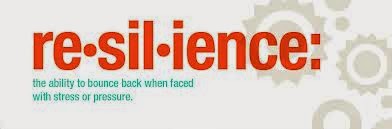
(Okay, so that last one doesn't make much sense, but it's funny, and it gets to another core value: developing a good sense of humor, and a healthy sense of the absurdity and exquisiteness of life. Always good to keep these kiddos and their developing wits on their toes.)
Tuesday, March 3, 2015
Be Open To New Truth
Nice quote attributed to the Buddha:

"If at some point in your life you adopt an idea or a perception as the absolute truth, you close the door of your mind. This is the end of seeking the truth. And not only do you no longer seek the truth, but even if the truth comes in person and knocks on your door, you refuse to open it. Attachment to views, attachment to ideas, attachment to perceptions are the biggest obstacles to the truth."
Subscribe to:
Posts (Atom)